Product Description:
Coriander is an annual herb from the carrot family, used both for its leaves (known as cilantro) and its seeds, which are a spice. The plant is known for its aromatic qualities and is widely used in various cuisines and traditional medicines.
Here's a more detailed description:
Appearance:
Coriander is an erect, branching herb, typically growing up to 1.3 meters tall. It has a well-developed taproot and a solid stem.
Leaves:
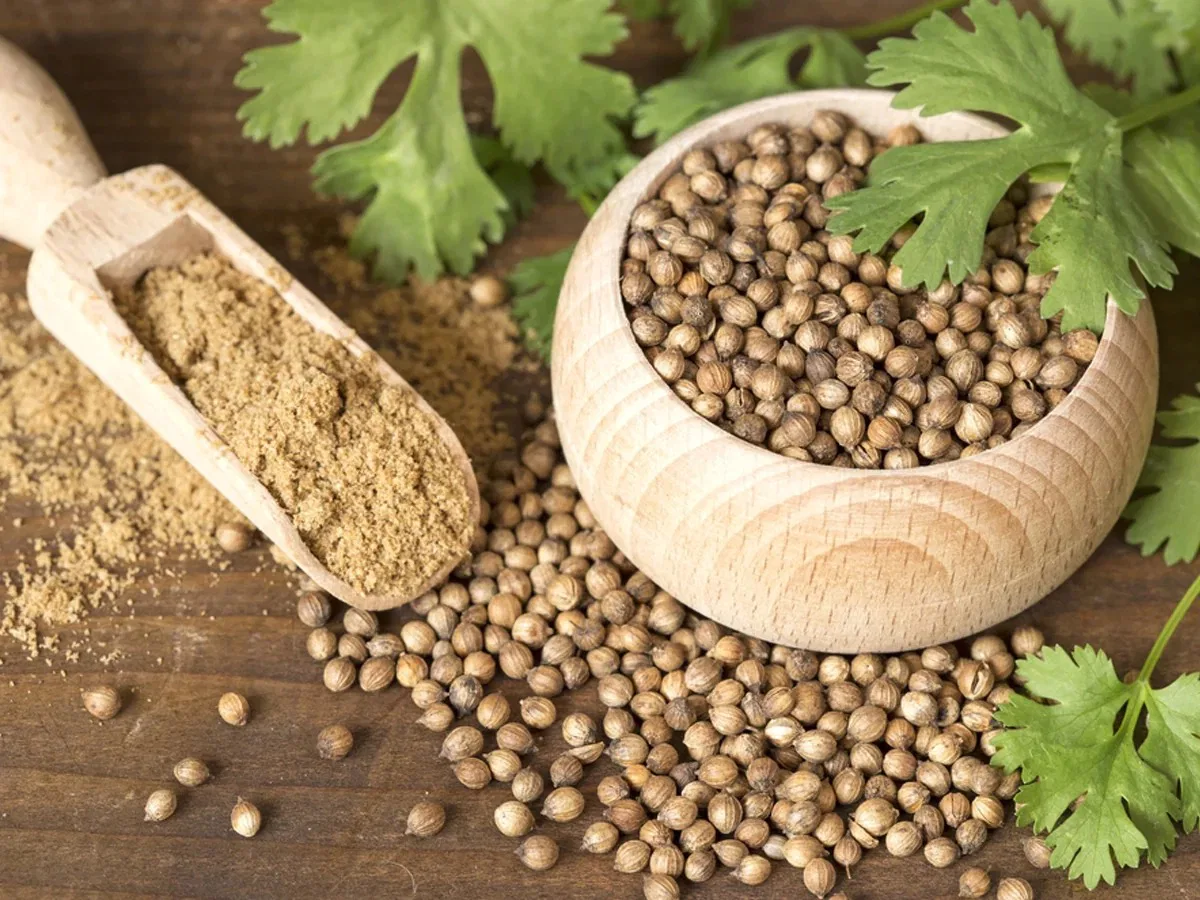
The leaves are variable in shape. Lower leaves are broadly lobed, while upper leaves are slender and feathery. They are often compared to Italian parsley.
Flowers:
The flowers are small, white or pale pink, and arranged in umbels.
Seeds:
The fruits are globular, about 3-4 mm in diameter, and break into two locules, each containing one seed. The seeds are pale white to light brown in color.
Aroma:
The entire plant has a pleasant, aromatic odor. The leaves, when fresh, can have a strong, fresh, green, tangy, or citrusy aroma. The seeds, when dried and used as a spice, are described as warm, nutty, and spicy, sometimes with an orange-like quality.
Uses:
Culinary: Coriander leaves (cilantro) are used fresh in salads, salsas, sauces, soups, and various dishes. The seeds are used as a spice in curry powders, pickling spices, sausages, and seasonings, as well as in baked goods and liquors.
Medicinal: Coriander seeds are traditionally used to aid digestion, and are considered carminative, diuretic, and antibilious. They are also used in Ayurvedic medicine and for various home remedies. Some modern studies suggest potential benefits for blood sugar and cholesterol control.
Variations:
There are two main types of coriander, distinguished by fruit size: one with larger fruits (3-5 mm) and another with smaller fruits (1.5-3 mm).