Product Description:
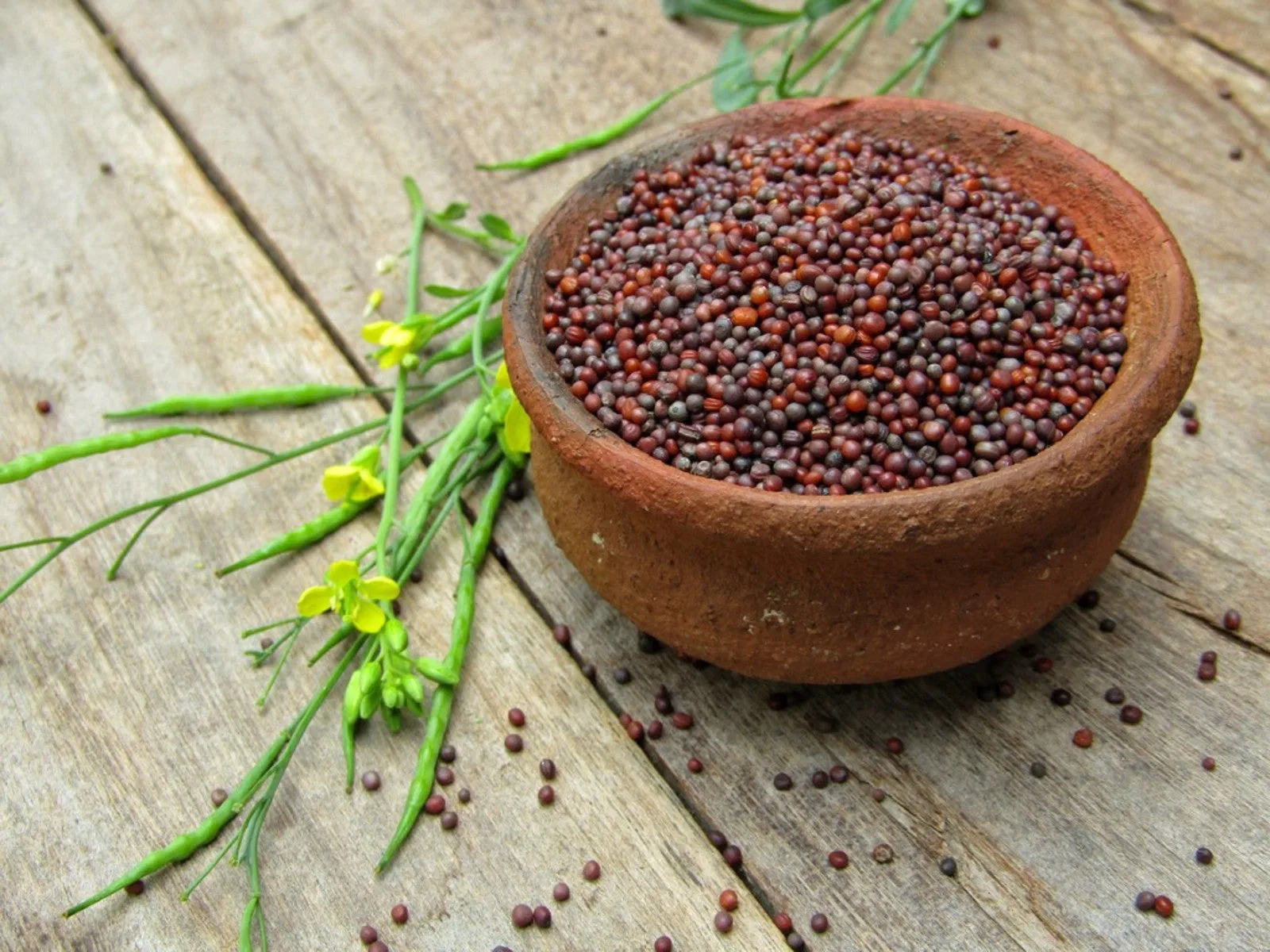
Mustard is a versatile plant, used both as a spice and a vegetable, belonging to the Brassica and Sinapis genera. It's cultivated for its seeds, which are ground to create the condiment mustard, and also for its leaves, known as mustard greens. The seeds, when crushed or ground, release an oil with a pungent flavor and aroma.
Here's a more detailed breakdown:
Botanical Description:
Mustard plants are typically erect, slender, and branched annual herbs, reaching a height of 3-5 feet.
They are part of the Brassicaceae family, which also includes cabbage, broccoli, and kale.
Mustard plants have a relatively short growing season, making them a good rotation crop with small grains.
The seeds are small, round, and can be black, brown, or yellow, depending on the variety.
Mustard leaves can be smooth or hairy, and their shape varies.
Uses:
Condiment:
Ground mustard seeds, mixed with liquids, create the familiar yellow condiment, Wikipedia says https://en.wikipedia.org/wiki/Mustard_(condiment) is used as a flavoring and for its preservative and antioxidant properties.
Mustard Greens:
The leaves of the mustard plant are edible and can be cooked or eaten raw.
Mustard Oil:
Mustard seeds can be pressed to extract oil, used for cooking, pickling, and in some traditional medicines.
Traditional Medicine:
Mustard and its oil have been used in various traditional systems of medicine for a range of ailments.
Phytoremediation:
Certain mustard species can be used to remove heavy metals from contaminated soil.
Other Uses:
Mustard oil is used in the tanning of leather, and the seedcake (leftover after oil extraction) can be used as cattle feed and fertilizer.
Varieties:
Yellow Mustard: (Sinapis alba) is known for its mild flavor.
Brown Mustard: (Brassica juncea) has a spicier flavor and is used in deli-style mustards.
Black Mustard: (Brassica nigra) is the hottest of the three and is sometimes mixed with wheat flour.
Oriental Mustard: (Brassica juncea) is also known for its spicier flavor.