Product Description:
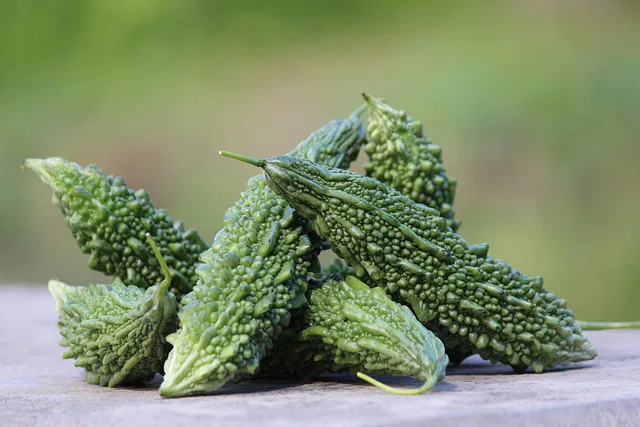
Bitter gourd, also known as bitter melon or Momordica charantia, is a tropical and subtropical vine-bearing plant with a distinctively bitter taste. It is characterized by its oblong, warty, and pointed fruit, which is green when immature and turns orange-yellow when ripe. The fruit is hollow, with a thin layer of flesh surrounding a central seed cavity filled with seeds and pith. Bitter gourd is widely cultivated and used in Asian cuisine, and is known for its health benefits and medicinal properties.
Plant Characteristics:
Vine: Bitter gourd is a slender, climbing vine that can grow up to 4 meters high.
Leaves: It has deeply lobed, dark green leaves.
Flowers: It produces yellow, separate male and female flowers.
Fruit: The fruit is oblong, pointed, and covered in longitudinal ridges and warts. It is green when immature and turns orange-yellow when ripe.
Seeds: The seeds are flattened, oval, and black, often enclosed in a bright red pulp when ripe.
Nutritional and Medicinal Value:
Vitamins and Minerals:
Bitter gourd is a good source of vitamins A and C, as well as minerals like potassium, calcium, and iron.
Antioxidants:
It contains antioxidant compounds like catechin, gallic acid, and chlorogenic acid.
Medicinal Properties:
Bitter gourd is traditionally used to help manage blood sugar levels, improve digestion, and potentially have anti-cancer properties.
Culinary Uses:
Asian Cuisine:
Bitter gourd is a common ingredient in Asian dishes, often prepared by stuffing, frying, or boiling.
Preparation:
The bitterness can be reduced by salting and soaking the sliced gourd before cooking.
Raw Consumption:
While the fruit is quite bitter, it can be eaten raw, especially when young.


.jpg?format=webp&quality=75&width=2560)